
product · source-backed review
OBSH-1 Blowing Agent
The supplied OBSH-1 manual describes a change to OBSH decomposition rate, intended to evaluate cure matching in selected rubber systems.
Discuss this requirement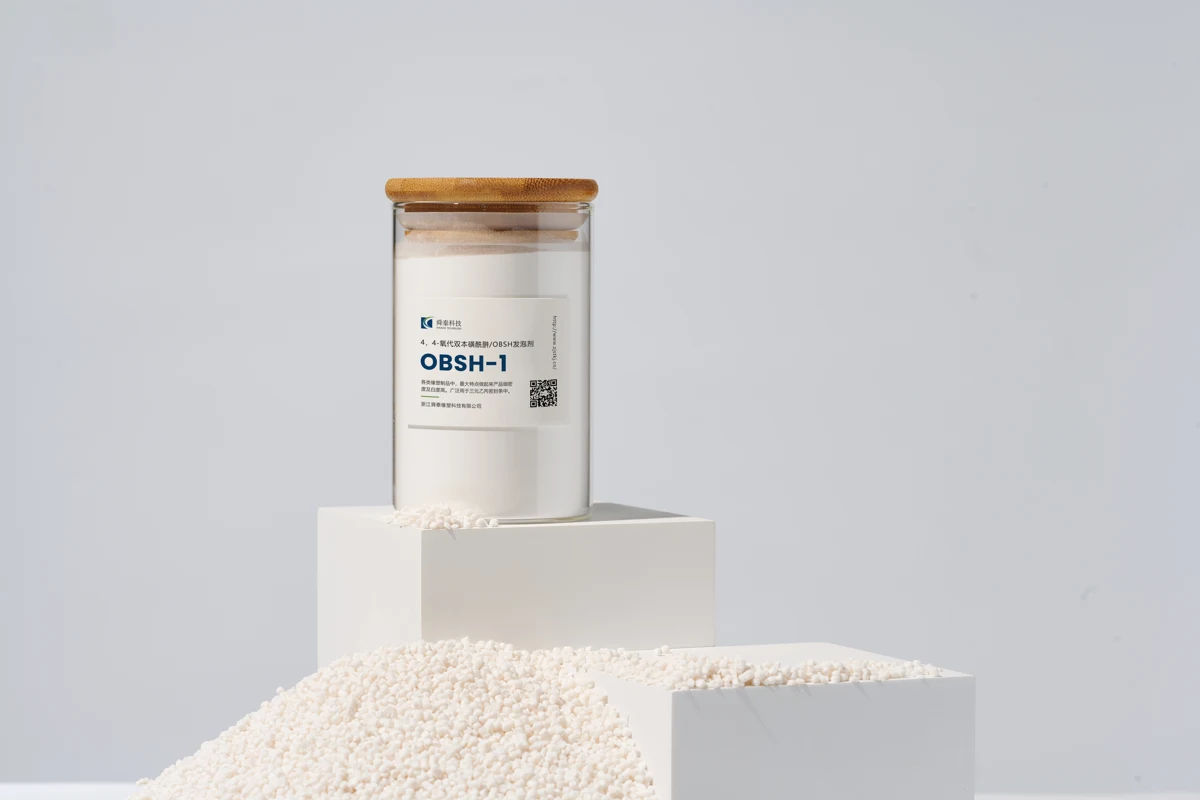
What this grade is designed to evaluate
The supplied OBSH-1 manual describes a change to OBSH decomposition rate, intended to evaluate cure matching in selected rubber systems.
OBSH-1 is distinct from OBSH. An adjusted release rate is not proof of improved performance on every EPDM compound.
Application direction and selection conditions
Evaluate OBSH-1 for selected rubber cure systems, including the EPDM seal application identified in its manual.
Provide the exact compound, cure system, actual material temperature, residence time and target cells. A material name alone is not sufficient to establish suitability. Finished-part performance must be verified on the customer’s formulation and equipment.
Values in the supplied model manual
Reference values below belong only to OBSH-1. They are not a current batch certificate; methods, revision and acceptance limits need confirmation.
| Property | Manual reference | Status |
|---|---|---|
| Appearance | White powder | Manual description |
| Decomposition temperature | 150–200 °C | Method/revision pending |
| Fineness | 6–10 μm | Size definition pending |
| Gas yield | 120 ± 5 ml/g | Test conditions pending |
| Packaging | 25 kg, lined carton or kraft bag | Confirm actual order |
Pending confirmation Current TDS/SDS/COA, test methods and batch acceptance criteria remain pending; do not transfer these values to another model.
Keep gas release aligned with the process
OBSH-1 is distinct from OBSH. An adjusted release rate is not proof of improved performance on every EPDM compound.
Record the formulation, cure/crosslinking system, dispersion, actual material temperature, pressure, residence time and cooling. No universal dose, reduction in odour, weight saving or mechanical-property guarantee is assigned to this grade.
Compare a baseline, a replacement and an optimised trial
- Current baseline: keep the existing compound, blowing agent, dosage and process; record the current result.
- Direct replacement: change only the candidate blowing agent to distinguish the grade effect.
- Optimised condition: review temperature, time, line speed, pressure or cooling within the customer’s permitted range.
- Alternative route: compare a second grade or a compound route where the evidence supports it.
Record density, cell distribution, shrinkage, colour, mechanical properties, odour and process stability. The customer’s finished-part specification determines acceptance.
Request the documents for the actual grade
- TDS
- Specification, method and revision for the selected model.
- SDS
- Handling, storage and transport information for the actual product.
- COA
- Results for the supplied batch, separate from general brochure values.
Pending confirmation Current model-specific TDS/SDS/COA and applicable original reports are not attached to this preview. No certificate or download button is fabricated.
Packaging, storage and handling
The supplied manual lists a 25 kg pack with an inner plastic liner, in a carton or kraft paper bag. Confirm the order’s pack format and destination requirements separately.
Its storage note calls for a cool, dry place away from sparks, fire and heat. Use the current grade-specific SDS for safety instructions, emergency measures and transport classification. The manual is not a replacement for that document.
Pending confirmation Shelf life, MOQ, dispatch time, pallet/loading plan and current transport classification require order-specific confirmation.
Questions for a model-specific trial
Can another grade use the same parameters?
No. Keep the model, manual, batch and test method together; run a controlled comparison for a replacement.
What should the trial compare?
Density, cells, surface, dimensions, mechanics, odour/chemical requirements and process stability against the current baseline.
Discuss OBSH-1 for your compound
Share the actual material and process, current issue, target properties, quantity and destination.
Ask about OBSH-1